
Nature
Wildlife
Monkeys in the rainforest, turtles on the beach, a dove found nowhere else.
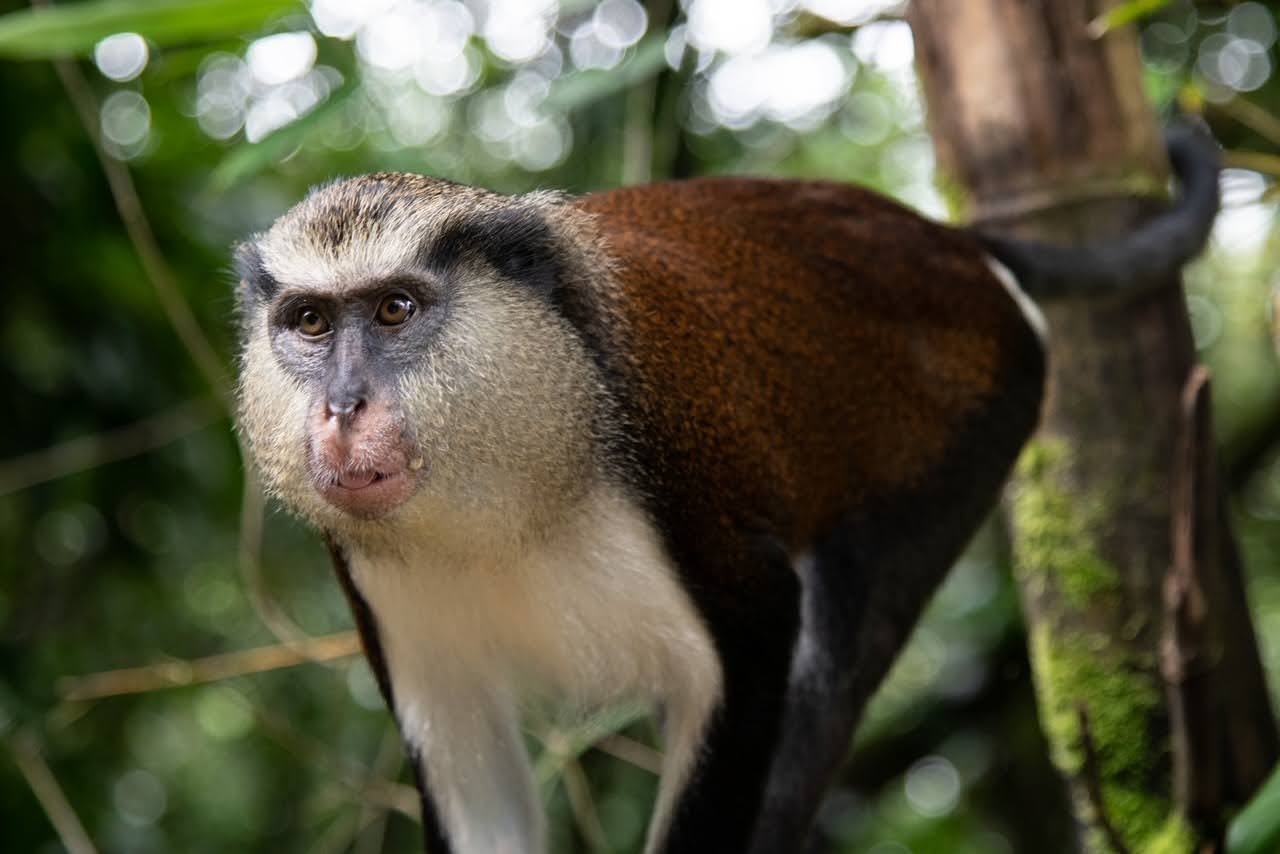
Banner: mona monkey near Grand Etang Lake. Photo © Rosa Pineda, Wikimedia Commons, CC BY-SA 4.0.
Grenada wildlife
Grenada’s wildlife
Grenada’s wildlife includes the Grenada dove, a critically endangered bird found nowhere else on Earth, mona monkeys in the rainforest around Grand Etang, the Grenada Bank tree boa, leatherback turtles nesting at Levera, nearly 200 recorded bird species, and the reef life of Molinere Bay.
For a small island, Grenada holds a surprising amount of life. Rainforest in the mountains, dry forest in the south, mangroves on the coast and reef offshore all sit within an hour of each other, and each has its own residents. Some are found only here. Others arrived with people, centuries ago. Knowing where to look is half the pleasure.
Found only here
The Grenada dove is Grenada’s national bird, and it lives on this island and nowhere else. It is critically endangered, with fewer than two hundred birds left, in the dry scrub and deciduous woodland of the south and west coasts, mainly around Mount Hartman and Beauséjour. It feeds quietly on the ground and is far easier to hear than to see: listen for a single descending note, repeated every seven or eight seconds.
The Grenada hook-billed kite is an endemic race of a bird found elsewhere in the Americas. It lives in the dry woodland of the south and feeds almost entirely on tree and land snails, which it pulls from their shells with its hooked bill. Fewer than fifty were estimated in 2007, and it is considered endangered.
The Grenada Bank tree boa lives only on Grenada and the Grenadines. It is common, it spends its life in the trees, it hunts at night, and it is harmless to people.
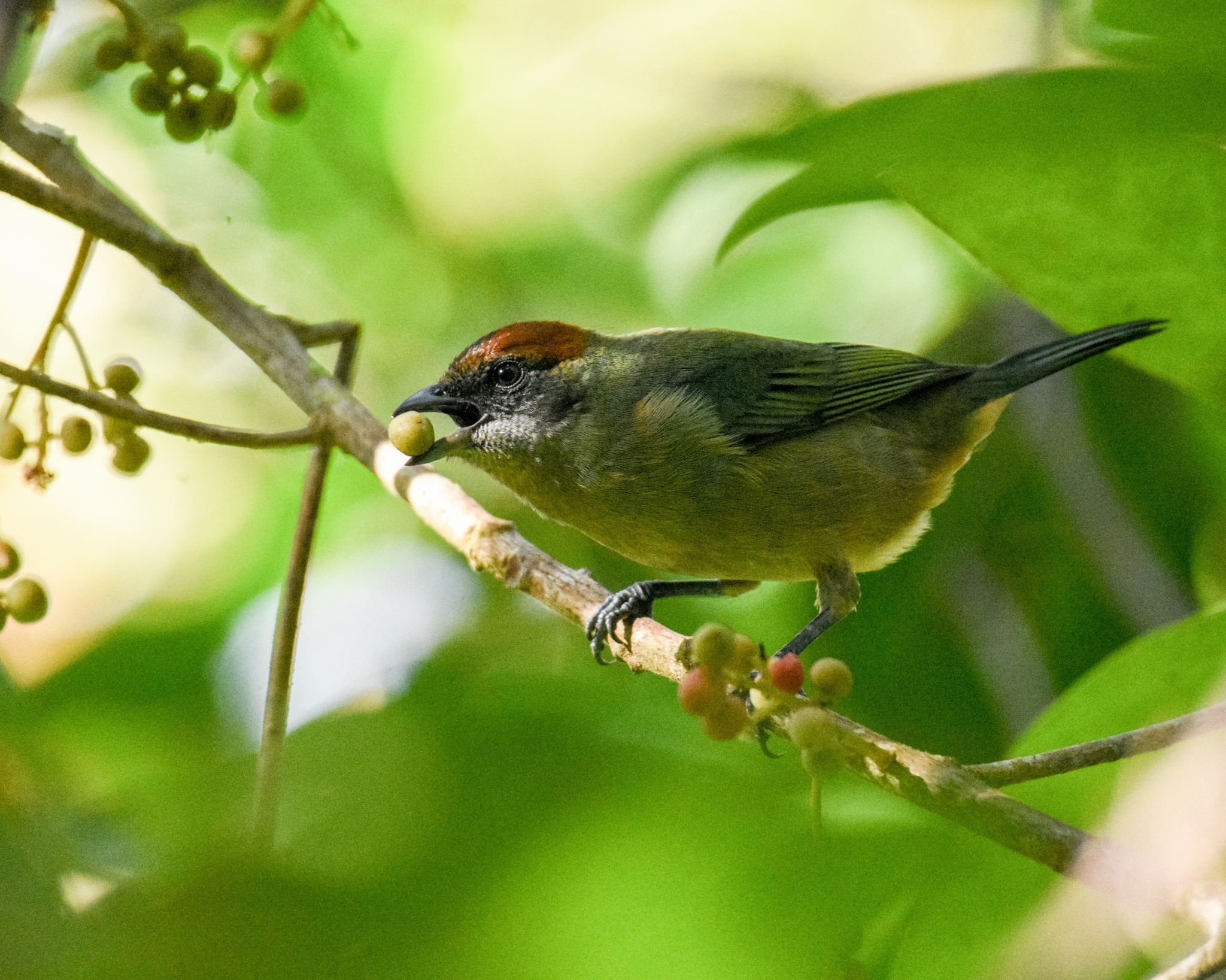
The Lesser Antillean tanager is found only on Grenada and St Vincent, often in small groups in the forest around Grand Etang.
The mona monkey
Grenada’s monkeys came from West Africa, brought to the island during the slave trade, and they have made the forests of Grand Etang and the central mountains their own. Look for a dark cap, white cheek whiskers and rufous sides. They forage in the trees in the mid-morning and late afternoon. In their native range, from Ghana to Cameroon, they are listed as Near Threatened. Please admire them without feeding them: a fed monkey quickly becomes a problem.
Birds
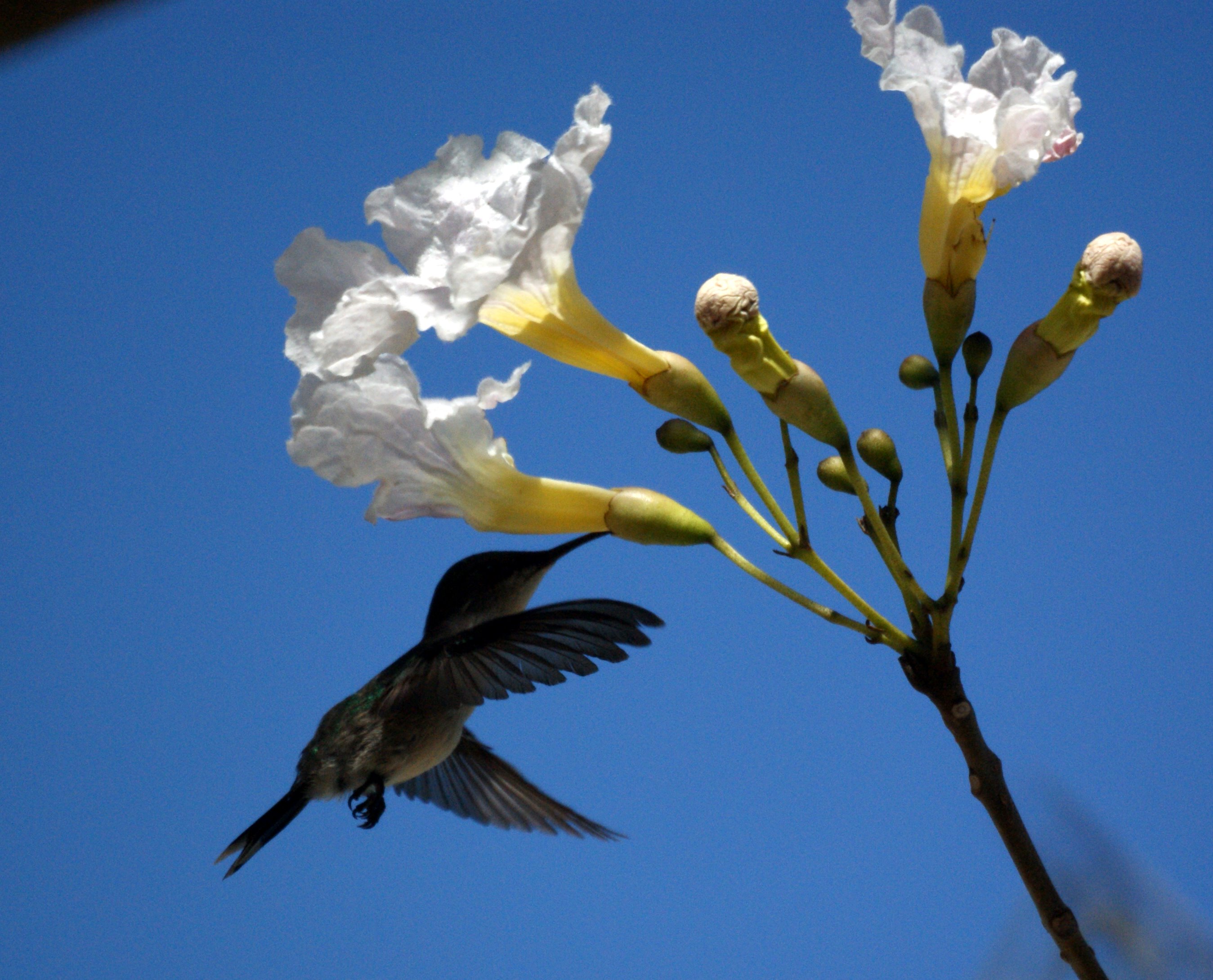
Nearly 200 bird species have been recorded on Grenada, and a 2018 to 2019 survey counted 32 resident land birds. Among the commonest are the Antillean crested hummingbird, the Lesser Antillean tanager, the Lesser Antillean bullfinch and the Grenada flycatcher. Bananaquits are everywhere, and in Grenada many of them are all black.
On the coast, brown pelicans and brown boobies fish the bays, and magnificent frigatebirds hang overhead on wings more than two metres across. Levera, Grenada’s only Ramsar wetland, has herons and black-necked stilts, and Woburn Bay is a stopover for migrating shorebirds. BirdLife names six Important Bird Areas on the island, including Grand Etang, Mount Hartman and Perseverance.
Turtles
Leatherback turtles, the largest turtles alive, come ashore at night to nest at Levera Beach from April to July. Hatchlings emerge from the early nests and scramble to the sea from May to July. Always watch with a licensed guide, and never use a torch, flash or phone light on the beach.
At sea, green turtles graze the seagrass, and the critically endangered hawksbill feeds on sponges along the reefs.
Under the water
Grenada’s reefs are home to stoplight parrotfish, whose feeding produces the fine white sand of the beaches, Atlantic blue tang, octopus, and spotted eagle rays, now listed as endangered. The easiest place to meet them is Molinere Bay, where the Underwater Sculpture Park has become a reef in its own right.
Other neighbours
- The manicou, Grenada’s opossum, is mostly seen at night. It can carry the parasites behind Chagas disease, so never handle one.
- The nine-banded armadillo lives in the forest. Among the Caribbean islands it is found only on Grenada, Trinidad and Tobago, and contrary to legend it cannot roll into a ball.
- The green iguana basks in the trees near the coast.
- The whistling frog, introduced in 1885, gives the Grenadian night its soundtrack: a short low note, then a higher whistle, over and over.
- The mongoose was introduced and is the main carrier of rabies on the island. Never approach or feed one.
- The blue land crab comes out on damp evenings near the coast.
Where to see it
Grand Etang
In the central mountains: rainforest, mona monkeys, hummingbirds and most of the island’s special forest birds, with trained guides. See Grenada’s waterfalls for the rainforest trails.
Mount Hartman and Perseverance
In the south-west: the dry forest refuge of the Grenada dove.
Levera
In the north-east: nesting leatherbacks in season, and the mangrove wetland.
Molinere Bay
On the west coast: the reef and the sculpture park.
Watching wisely
Admire and photograph, but do not feed, touch or crowd wild animals. Watch nesting turtles only with a licensed guide, with no white light. Never stand on or touch coral, and take nothing living from the sea. Do not buy tortoiseshell, coral, or anything made from a protected species.
The Spice Isle Field Guide
I wrote a free illustrated field guide to fifty-seven of the island’s birds, animals, reef life, spices and flowers, with a checklist for ticking off what you spot. Download The Spice Isle Field Guide.
Frequently asked questions
What animals are found only in Grenada?
The Grenada dove lives on Grenada and nowhere else. The Grenada hook-billed kite is an endemic race found only here, and the Grenada Bank tree boa lives only on Grenada and the Grenadines.
Are there monkeys in Grenada?
Yes. Mona monkeys, brought from West Africa during the slave trade, live in the forests of Grand Etang and the central mountains.
Where can I see the Grenada dove?
In the dry forest of the south-west, mainly around Mount Hartman and Beauséjour. With fewer than two hundred birds left, it is shy and best found with a guide, early in the morning.
When can I see turtles nesting in Grenada?
Leatherbacks nest at Levera Beach from April to July, and hatchlings emerge from May to July. Watch only with a licensed guide.
Are there venomous snakes in Grenada?
No. Grenada has no venomous snakes. The one you are most likely to see, the slender Grenada Bank tree boa, is harmless to people; it lives in the trees and hunts at night. The animal to keep clear of is the mongoose, the island’s main carrier of rabies.
How many bird species live in Grenada?
Nearly 200 species have been recorded, of which 32 are resident land birds. Grenada is home to seven of the bird species found only in the Lesser Antilles.
Out into the wild
A guided rainforest walk at Grand Etang, a quiet early morning in the dry forest for the dove, a turtle watch at Levera in season, or a snorkel over the sculptures: tell me what you would like to see, and I will arrange it with a local guide who knows the right trail and the right hour.