
On the Water
Underwater Sculpture Park
Art that becomes reef, in the clear water of Molinere Bay.
Molinere Bay
Grenada’s most famous view is under the sea
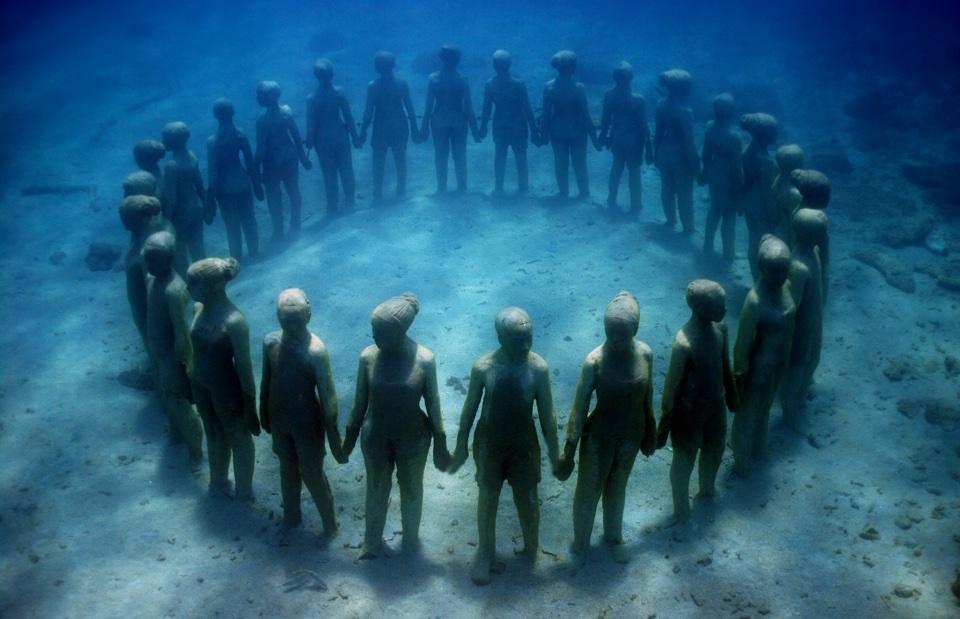
Off Grenada’s west coast, in the clear water of Molinere Bay, a circle of children stands holding hands on the seabed. A man sits at his desk before a typewriter. A table is laid for a meal no one will eat. Year by year, coral, sponges and fish make each of them their own.
This is the Molinere Underwater Sculpture Park, the first underwater sculpture park by the British artist Jason deCaires Taylor, installed in 2006 after Hurricane Ivan had damaged the reef here in 2004. It has since been named among National Geographic’s 25 Wonders of the World, and for many of my guests it is the reason they get in the water at all.
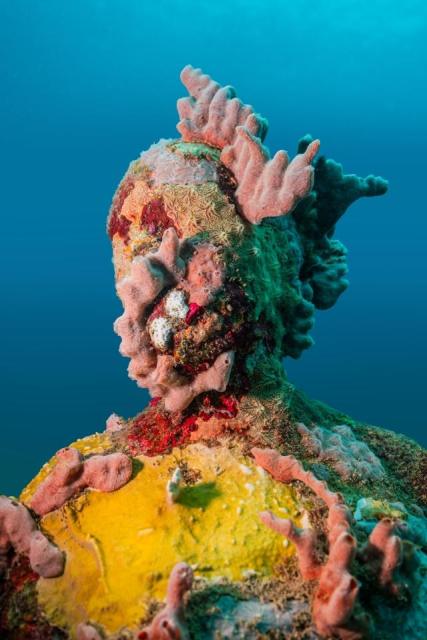
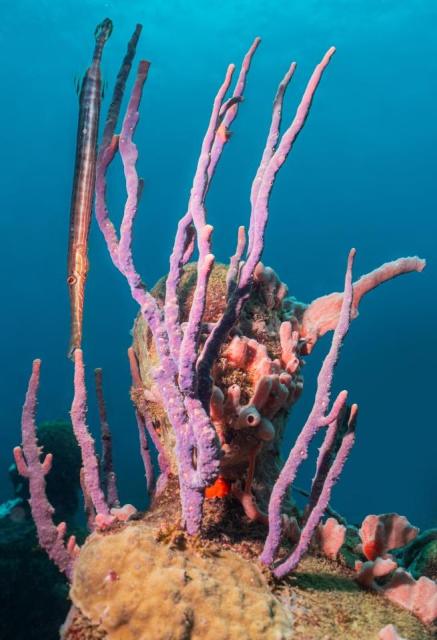
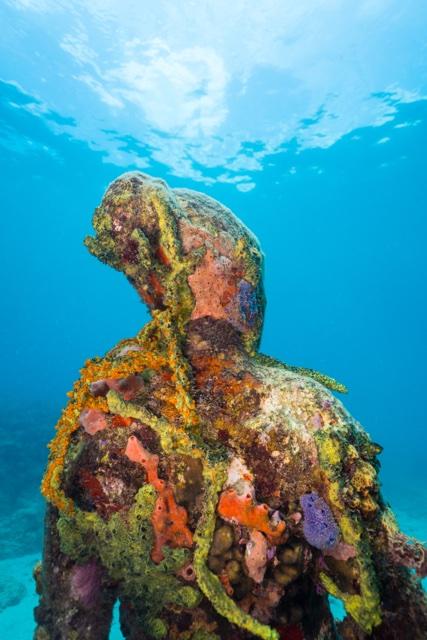
Sculpture and photograph © Jason deCaires Taylor. Used with permission.
Art that becomes reef
The sculptures are cast in pH-neutral cement and stainless steel, with textured surfaces where coral can settle and grow. They give marine life a new place to live and draw visitors away from the fragile natural reefs nearby. The park sits inside the Molinere Beauséjour Marine Protected Area, and visitor fees help fund the rangers who protect it.
The pieces to look for
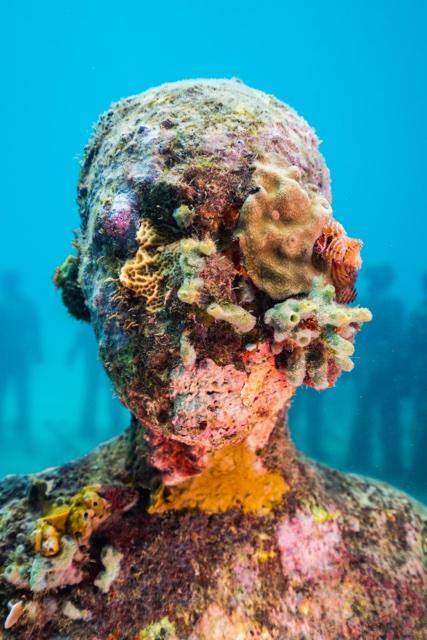
Vicissitudes (2007)
The park’s best-known work: a ring of figures cast from local children of different backgrounds, holding hands and facing outward into the current. The artist describes it as a symbol of unity and resilience, and many Grenadians see it as a tribute to enslaved Africans.
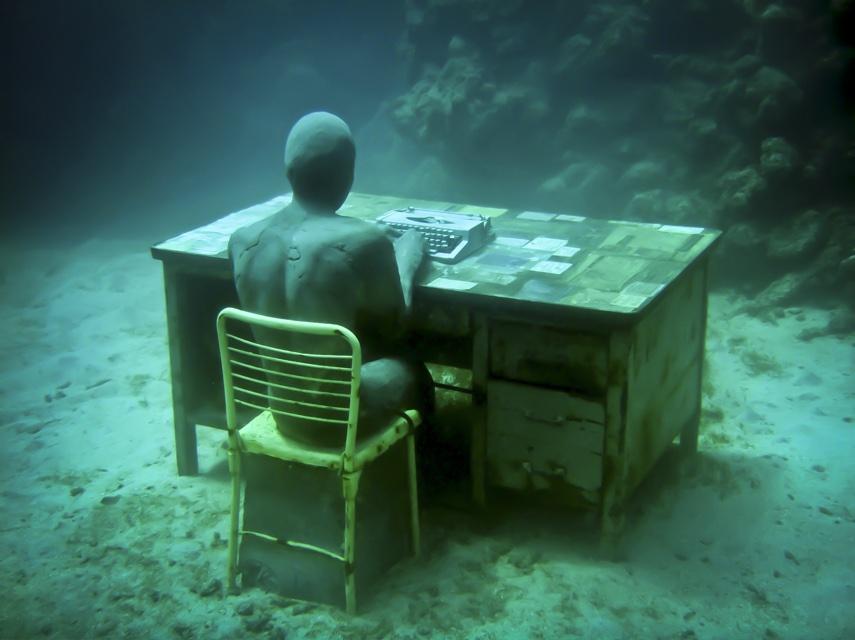
The Lost Correspondent (2006)
A man at a desk with a typewriter, among newspaper articles from the 1970s, some on Grenada’s history before the revolution.
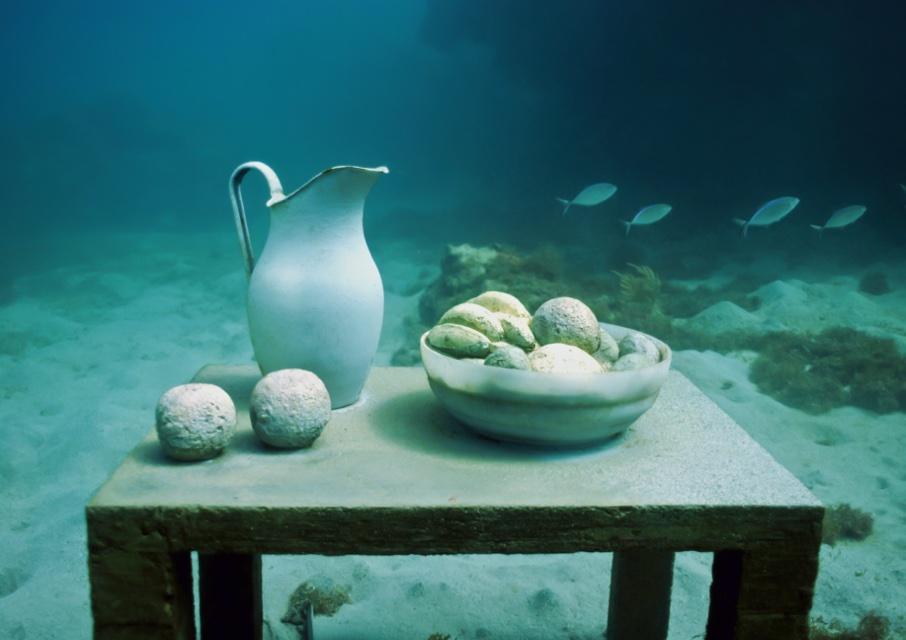
The Unstill Life (2006)
A table laid with a vase and a bowl of fruit, slowly turning to coral.
Grace Reef (2006)
A group of figures, all cast from a single Grenadian woman.
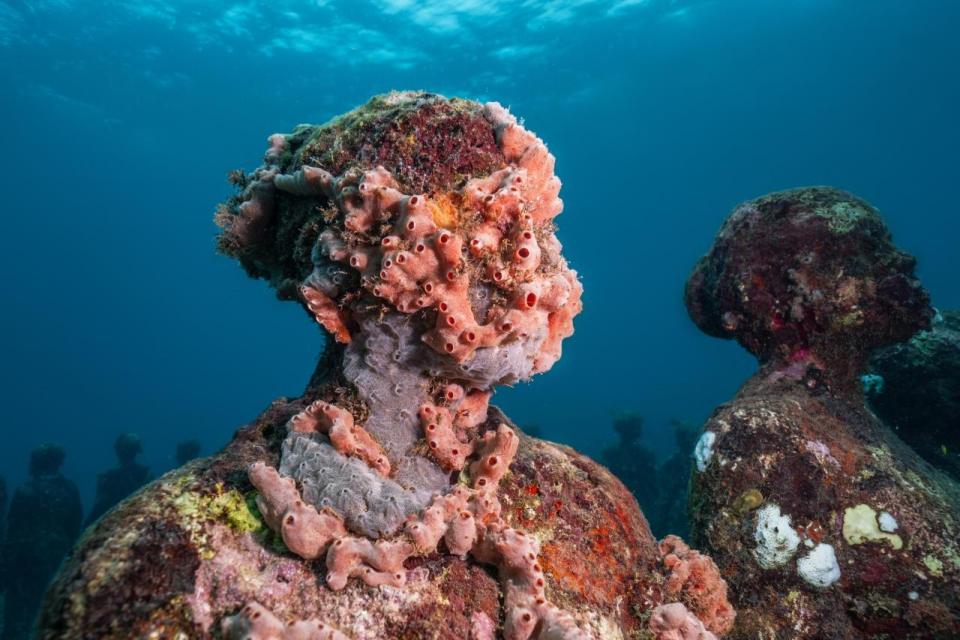
Coral Carnival (2023)
The newest pieces: characters from Spicemas, Grenada’s carnival, including Jab Jab, Vieux Corps, Pretty Mas, Shortknee and Wild Indian, alongside works by the Grenadian artist Troy Lewis.
How to see it
The sculptures lie roughly 5 to 8 metres down, some a little deeper, among sand patches and gullies between natural rock. That makes them visible to snorkellers on a clear day and an easy, beautiful dive.
Snorkelling. Most guests see the park this way, usually as part of a half day on the water with a stop at Flamingo Bay.
Diving. Divers get closest to the detail of the pieces and the life on them.
From a glass-bottom vessel. For guests who would rather stay dry, the sculptures can be seen from above.
Trips leave from St George’s and Grand Anse. You can see and book the sculpture park trips from Grenada’s local dive, snorkel and sailing operators in my app, This is Grenada, or tell me your dates and I will arrange it for you, including a private yacht for your party.
The marine park fee
Every visitor to the Marine Protected Area pays a conservation fee, per person per visit, in US dollars. Under the schedule published by the Grenada Tourism Authority, it is US$7.00 from 1 October 2026, rising to US$10.00 from 1 October 2027. I confirm the current amount and include it in your arrangements.
Meet the artist
Jason deCaires Taylor has since created underwater museums around the world. You can see more of his work at underwatersculpture.com.
Frequently asked questions
Where is the Underwater Sculpture Park in Grenada?
In Molinere Bay on the west coast, inside the Molinere Beauséjour Marine Protected Area. Trips leave from St George’s and Grand Anse.
Can you snorkel the sculpture park, or do you need to dive?
You can do either. Most of the sculptures lie roughly 5 to 8 metres down, so on a clear day snorkellers see them well from the surface. Divers get closer to the detail.
Who made the sculptures?
The park was created by the British artist Jason deCaires Taylor, who installed the first pieces in 2006. Later works include pieces by the Grenadian artist Troy Lewis.
How many sculptures are there?
The artist’s own site lists 75 works, including the Coral Carnival figures added in 2023.
Is there a fee to visit?
Yes. The Marine Protected Area charges a conservation fee per person per visit, in US dollars: US$7.00 from 1 October 2026, under the Grenada Tourism Authority’s published schedule. I confirm the current amount when I book.
Can we go privately?
Yes. I can arrange a private snorkel or dive, or a private yacht that combines the sculpture park with Flamingo Bay and a quiet beach.
Why was the park created?
To give coral and marine life a new place to grow after hurricane damage, and to draw visitors away from the fragile natural reefs nearby.
Into the water
When would you like to see the sculptures? Tell me your dates and how you would like to see them, snorkelling, diving or from a private yacht. I will check availability and take care of every detail.